
Bangkok in 3 Days
Temples at sunrise, street food at midnight, and rooftop cocktails between — the essential Bangkok experience, hour by hour.
Understanding Bangkok's
Neighbourhoods
Bangkok is vast. Before you plan anything, it helps to know where the key areas are and how they differ in character.
Rattanakosin
Bangkok's historic heart. Home to the Grand Palace, Wat Pho, and Wat Arun. Touristy but unmissable.
Chinatown (Yaowarat)
Gold shops, street food stalls, and legendary night markets. Best experienced after dark.
Sukhumvit
Bangkok's modern spine. Sky trains, rooftop bars, international restaurants, and the Asok area.
Chao Phraya
The lifeblood of old Bangkok. River ferries, riverside temples, and stunning sunset views.
Temples, the Grand Palace & the Old City
Bangkok's historic core — golden spires, sacred Buddhas, river sunsets, and the best pad thai of your life.
Breakfast Like a Local at Or Tor Kor Market
Start early — Bangkok's temples are cooler and less crowded before 9am, and the best breakfast stalls sell out fast. Or Tor Kor Market near Chatuchak is widely considered Bangkok's finest fresh market. Pick up a bag of ripe mangoes, Thai iced tea, and a sticky rice parcel for a true local breakfast.
The Grand Palace & Wat Phra Kaew
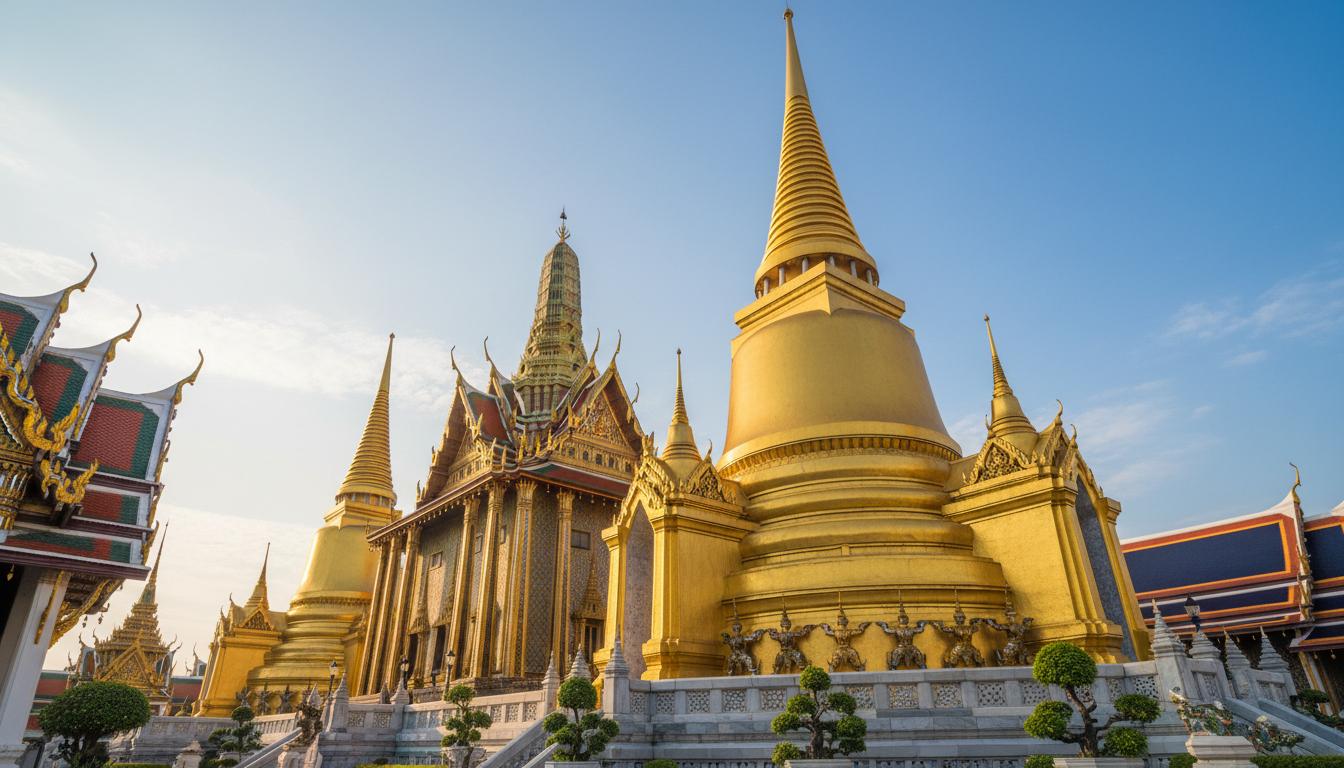
Thailand's most famous — and frankly awe-inspiring — landmark. The Grand Palace compound houses the sacred Wat Phra Kaew (Temple of the Emerald Buddha), which contains a tiny jade Buddha regarded as the most sacred image in the country.
Wat Pho — The Reclining Buddha
A short walk south of the palace, Wat Pho is one of Bangkok's oldest and largest temple complexes. The centrepiece is the extraordinary 46-metre Reclining Buddha, coated in gold leaf and housed in a narrow building that forces you to crane your neck to take it all in. The feet alone are 5 metres tall and inlaid with mother-of-pearl.
Lunch at Tha Tian Market
Just outside Wat Pho's back gate, Tha Tian Market is a covered riverside market where Bangkok locals eat. Grab a plastic stool, order from one of the stalls, and look out over the Chao Phraya river. Try the pad thai or boat noodles — this is where they were perfected.
Markets, Canals & the River
Floating markets at dawn, Chatuchak's chaos, and a rooftop cocktail as the city lights up.
Damnoen Saduak Floating Market
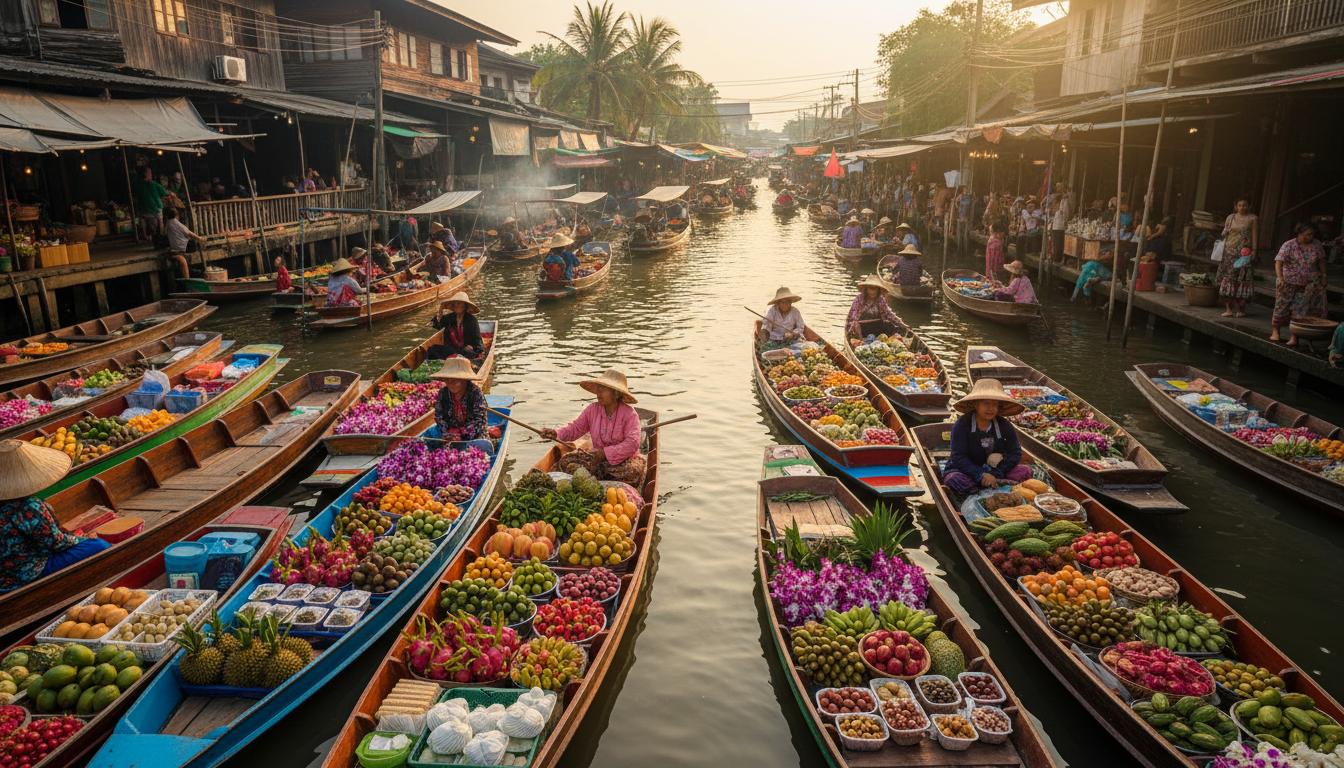
Leave Bangkok before sunrise to catch the floating markets at their most atmospheric. Damnoen Saduak is the most famous — a labyrinth of canals where vendors sell produce, crafts, and cooked dishes from wooden boats. It's touristy but undeniably photogenic.
Amphawa Floating Market
On the way back, stop at Amphawa — a smaller, more authentic canal-side market town that most tourists skip. Browse the weekend market stalls selling handmade goods, fresh seafood, and Thai sweets, and grab a traditional boat-noodle soup (30–40 THB per bowl) at one of the canalside restaurants. Far less crowded than Damnoen Saduak and genuinely charming.
Chatuchak Weekend Market
Back in Bangkok, spend the afternoon at Chatuchak Weekend Market — one of the world's largest markets, with over 15,000 stalls spread across a 35-acre site. Open only on Saturdays and Sundays, it's an overwhelming and utterly brilliant bazaar covering vintage clothing, handmade jewellery, antiques, plants, street food, furniture, ceramics, and frankly anything else you can imagine.
Sunset at a Bangkok Rooftop Bar
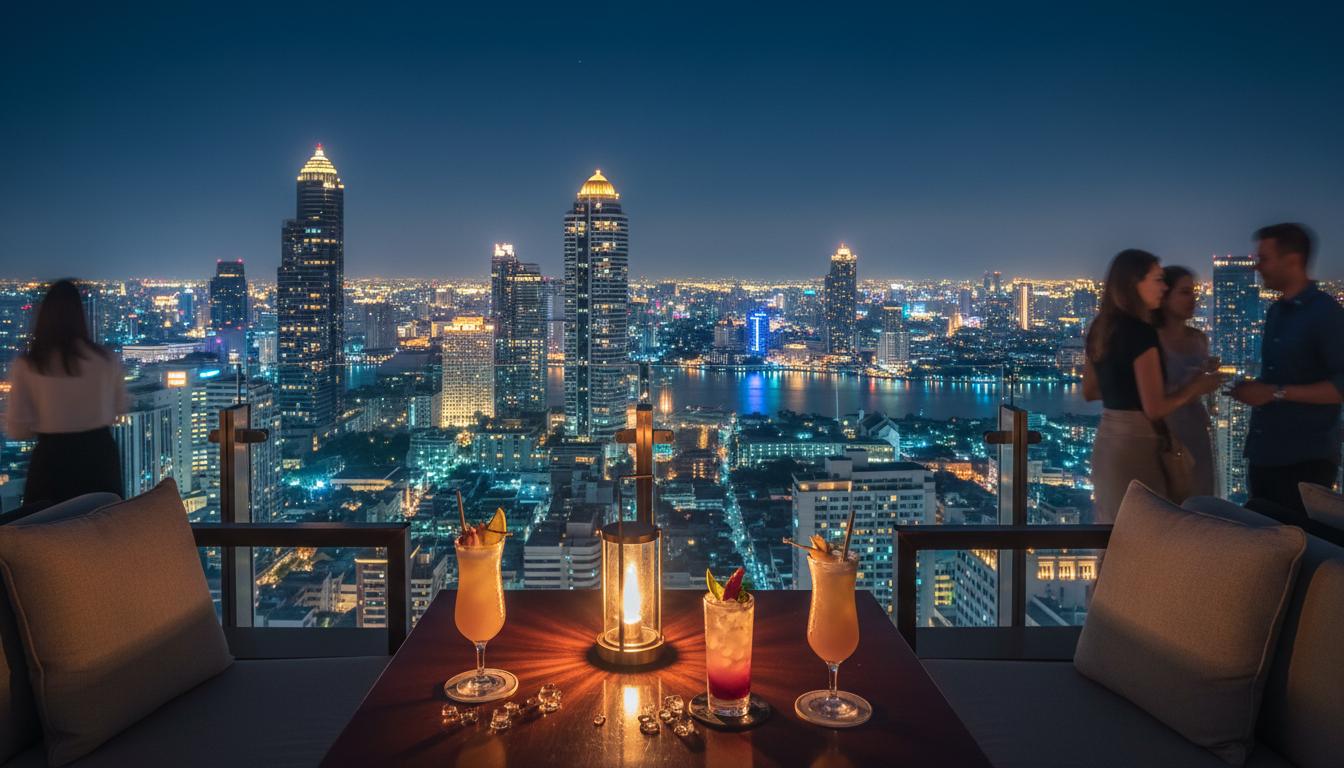
Bangkok's rooftop bar scene is world-class, and watching the sun sink behind the city skyline from 60 floors up is a genuinely unforgettable experience. The best options:
"Bangkok doesn't ask you to take it slow. It asks you to keep up — and rewards you handsomely when you do."— Travel Thailands
Modern Bangkok — Art, Shopping & One Last Feast
The city's creative, contemporary side — street art, world-class malls, hidden cocktail bars, and a goodbye dinner you'll talk about for years.
Bangkok Art & Culture Centre (BACC)
Start your final day at the Bangkok Art & Culture Centre, a striking contemporary building near Siam housing rotating exhibitions of Thai and international artists. It's air-conditioned (a blessing), free to enter, and gives you a window into Bangkok's thriving creative scene most tourists miss entirely.
Siam & Central World Shopping District
Bangkok's shopping malls are attractions in their own right. Siam Paragon houses a luxury car showroom and an entire basement food court that rivals many cities' best restaurants. CentralWorld and IconSiam on the river are equally impressive — the latter even has an indoor floating market.
Charoen Krung Street Art & Creative District
Wander the backstreets of Charoen Krung, Bangkok's oldest road and now its most exciting creative district. Murals by international street artists cover warehouse walls. Stop into Warehouse 30 for galleries and design shops, or Jam Factory for architecture, books, and excellent coffee.
Farewell Dinner at Bo.lan or Le Du
End your Bangkok journey with a meal at one of the city's two Michelin-starred Thai restaurants. Bo.lan serves refined traditional Thai in a beautiful restored house, while Le Du offers modern Thai tasting menus that have earned it Asia's top rankings. Book weeks ahead — these tables are the hottest in the city.
Where to Eat
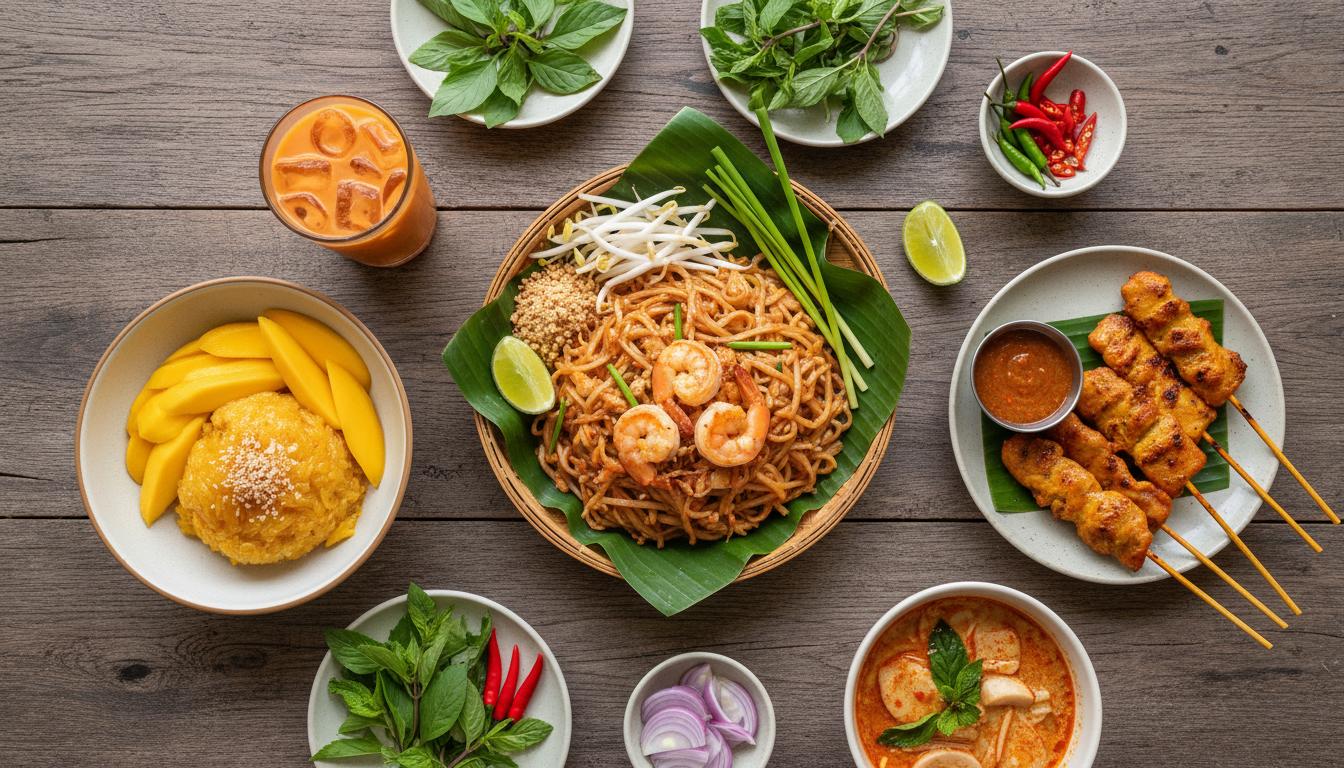
The dishes you cannot leave Bangkok without trying — and exactly where to find the best versions.
Pad Thai
The national dish. Go to Thip Samai on Maha Chai Rd — the queue is always long for a reason.
River Prawns
Charcoal-grilled giant river prawns at T&K Seafood, Yaowarat. Order two minimum.
Khao Man Gai
Silky poached chicken over fragrant rice. Best at Boon Tong Kee near Amarin Plaza.
Boat Noodles
Tiny bowls of intensely flavoured pork or beef noodle soup. Order five or six at once.
Mango Sticky Rice
The quintessential Thai dessert. Or Tor Kor Market has the best version in Bangkok.
Street Skewers
Moo ping (grilled pork skewers) with glutinous rice — the ultimate Bangkok breakfast snack.
Practical Tips for Bangkok
Everything you need to navigate the city like a local, from transport to temple etiquette.
🚇 BTS Skytrain
Avoid traffic completely. Best for Sukhumvit, Silom, and Chatuchak. Buy a Rabbit Card for discounts on fares (16–59 THB).
🚇 MRT Subway
Covers Chinatown, Silom, and Chatuchak with interchange stations connecting to BTS. Fares range 17–42 THB.
⛵ Chao Phraya Boat
Old City temples and riverside access. Orange flag boats run all day and cost only 15–40 THB — often faster than taxis.
📱 Grab App
Metered, reliable, no haggling. Fixed price shown in app before booking. Typically 80–200 THB for most inner-city trips.
🚕 Metered Taxi
Insist on the meter (~35 THB flag fall). Pink and green taxis are generally more reliable than yellow-black.
🛺 Tuk-Tuk
Short hops and local experience only. Negotiate first (50–150 THB), never take "free" offers — they lead to gem shops.
Transport at a Glance
| Transport | Best For | Typical Cost | Pro Tip |
|---|---|---|---|
| BTS Skytrain | Sukhumvit, Silom, Chatuchak | 16–59 THB | Buy a Rabbit Card for discounts |
| MRT | Chinatown, Silom, Chatuchak | 17–42 THB | Connects to BTS at interchange stations |
| Chao Phraya Boat | Old City temples, riverside | 15–40 THB | Orange flag boats run all day |
| Grab Car | Anywhere, door-to-door | 80–200 THB | Fixed price shown in app before booking |
| Tuk-Tuk | Short hops, local experience | 50–150 THB | Negotiate first, never take "free" offers |
⚠️ Bangkok Traffic Warning: Rush hour (7–9am, 5–8pm) can turn a 5km journey into a 45-minute ordeal. Plan temple mornings before 9am and use the BTS or MRT wherever the lines reach. For cross-city trips, the Chao Phraya boat is often faster than any road option.
Before You Go Checklist
Ready for Bangkok?
Explore all our Bangkok guides, hotel picks, and insider tips for Thailand's incredible capital.